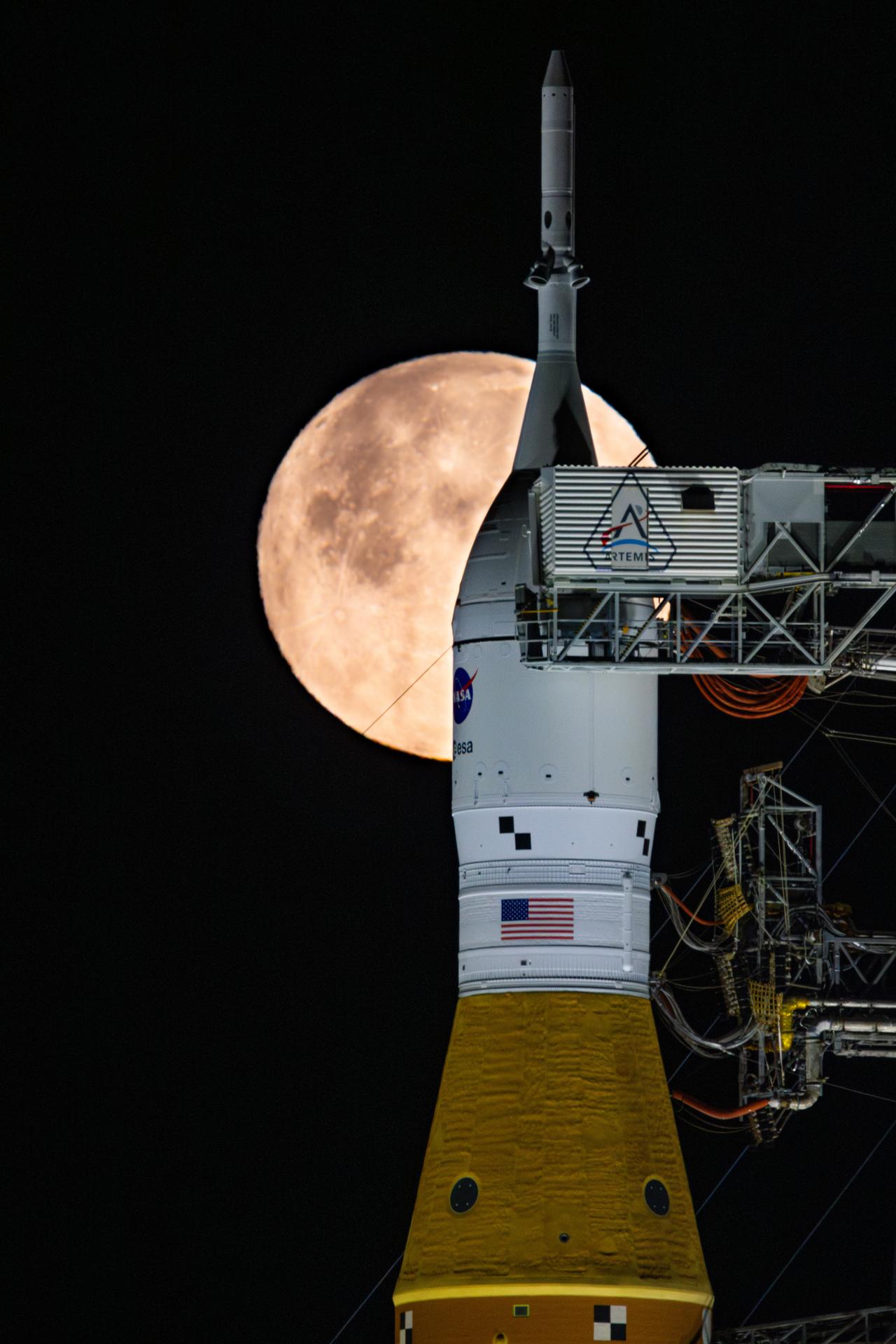
In 1968, the Apollo 8 mission marked the first time NASA sent humans into the Moon’s orbit. After that came the renowned Apollo 11 flight in 1969 that landed the first humans on the lunar surface. However, NASA has not sent humans to the Moon since the conclusion of the Apollo program in 1972. That was until the Artemis program launched in 2022 to resume their efforts in lunar exploration. The first mission of the program was Artemis I, an uncrewed space flight to the Moon’s orbit for about a week. In 2023, though, NASA announced information about a second mission named Artemis II.
Artemis II plans to send four astronauts around the Moon’s orbit and back to Earth this year, which will be the farthest human mission from Earth. The astronauts on this 10-day mission will be Reid Wiseman, Victor Glover, Christina Koch, and Jeremy Hansen. The mission is mostly aimed at testing the life-support, communications, and navigation systems of the Orion spacecraft, or the capsule that the astronauts will be on during their flight. This will be the first crewed mission of the Orion and act as a test flight for future Artemis missions featuring the same spacecraft.
The Artemis II rocket was originally set to launch in February 2026, but has been rescheduled to March 6 due to some technical issues. During a prelaunch test, a leak occurred in the hydrogen tanking system. Because hydrogen is highly flammable, leaks in the hydrogen tanking system of the rocket can increase the risk of deadly explosions and threaten the safety of the crew. Similar issues also arose during the previous Artemis I mission, which caused that mission to be delayed several times for hydrogen leaks as well until its official launch in 2022.
Addressing these issues immediately is especially important for NASA in order to stay on track of the Artemis agenda. In fact, the program has eight more planned missions lined up until 2036. The next scheduled mission will be Artemis III in 2028, which hopes to land humans on the Moon’s surface after more than 50 years. For now, the team is working to resolve the technical issues to launch Artemis II on schedule in early March to pave the way for these future missions.