
















The recent action of the Trump administration raises immediate concerns in regards to the administration’s power, and the day-to-day life of the citizens of Venezuela
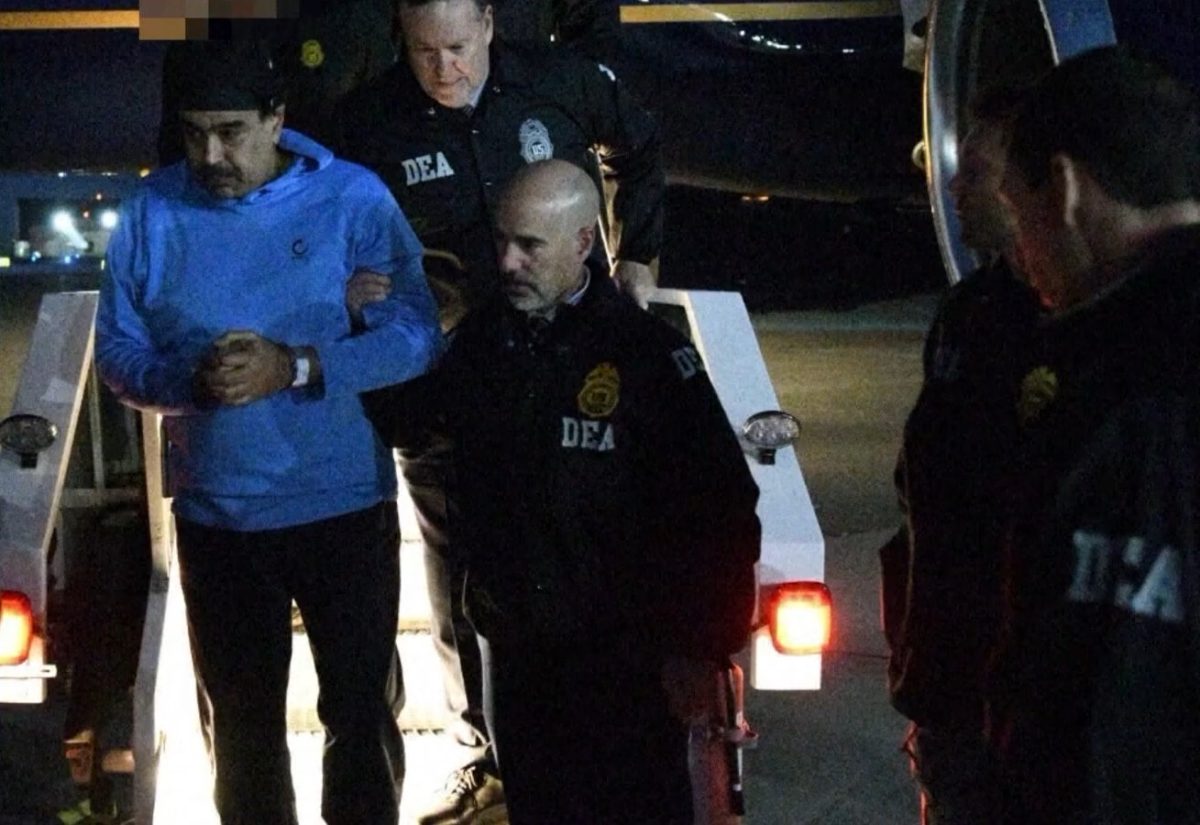
Following months of legally questionable U.S. strikes on boats in the Caribbean that killed approximately 100 people, Trump ordered troops to attack the sovereignty of Venezuela. On January 3, 2026, US military forces bombed the capital and abducted the leader of Venezuela, Nicolas Maduro, and his wife. After the attack, President Trump announced that the U.S. will play a role in running the country’s government until a settlement is reached with the current government.
This attack on Venezuela violates the International Law and raises questions about America’s role on the international stage and any potential repercussions. Trump’s action goes against Article 2(4) of the Charter of the UN, which prohibits any use of threat or force and claims that all international disputes should be settled in peaceful ways. It also goes against the Charter of the Organization of American States (OAS), which was established in 1948 and signed by the United States and many Latin American countries, to achieve order and peace and defend each country’s sovereignty. In article 21 of the OAS, it states a state’s land, air, and water are protected from occupations of any other state and forbids even temporary military presence or control over another state.
Not only does it violate international law but it has also laid the groundwork for further similar operations from other countries as they have come to know that there are no severe consequences for violating international law. Now international law is no more than just a suggestion.
The USA has invaded numerous states in Latin America. From 1898 to 1994, the U.S. government intervened in Latin American states of at least 41 countries, such as Cuba, Panama, Grenada, Chile, Haiti, Grenada, and more. It’s easier to conclude that overthrowing governments in Latin America has been a routine for America. In nearly every case, America has justified their invasions with U.S.’s security interests. However, they were often driven by economic interest, protecting United States corporations, like the United Fruit Company in Guatemala in 1954. It’s far from being a coincidence that the majority of the United States invasions in Latin America resulted in numerous benefits for the United States’ economy.
In all of these invasions, we can see that America’s intervention has had consequences for each country’s population. The United States’ invasions have led to violence, human rights abuses, long-term political instability, economic hardships, exploitation of natural resources, and massive displacements, which creates an opportunity for America to benefit from. In the context of previous political instability, concerns for Venezuelans arise as no one knows what the future holds. We can, however, circle our way through history and find similar patterns that do incite to what the future looks like.